
Introduction
Winter can be a challenging season for older adults, especially those experiencing knee pain, stiffness, or arthritis. During colder months, many seniors spend more time indoors and reduce their physical activity. This can make it harder to maintain muscle strength, flexibility, and joint mobility.
However, staying active is important for maintaining healthy knees and enjoying everyday activities such as walking, climbing stairs, and spending time with family.
The good news is that simple winter exercises for seniors can help improve knee mobility, strengthen supporting muscles, and maintain an active lifestyle. With the right exercises and a few precautions, older adults can continue moving comfortably throughout the winter season.
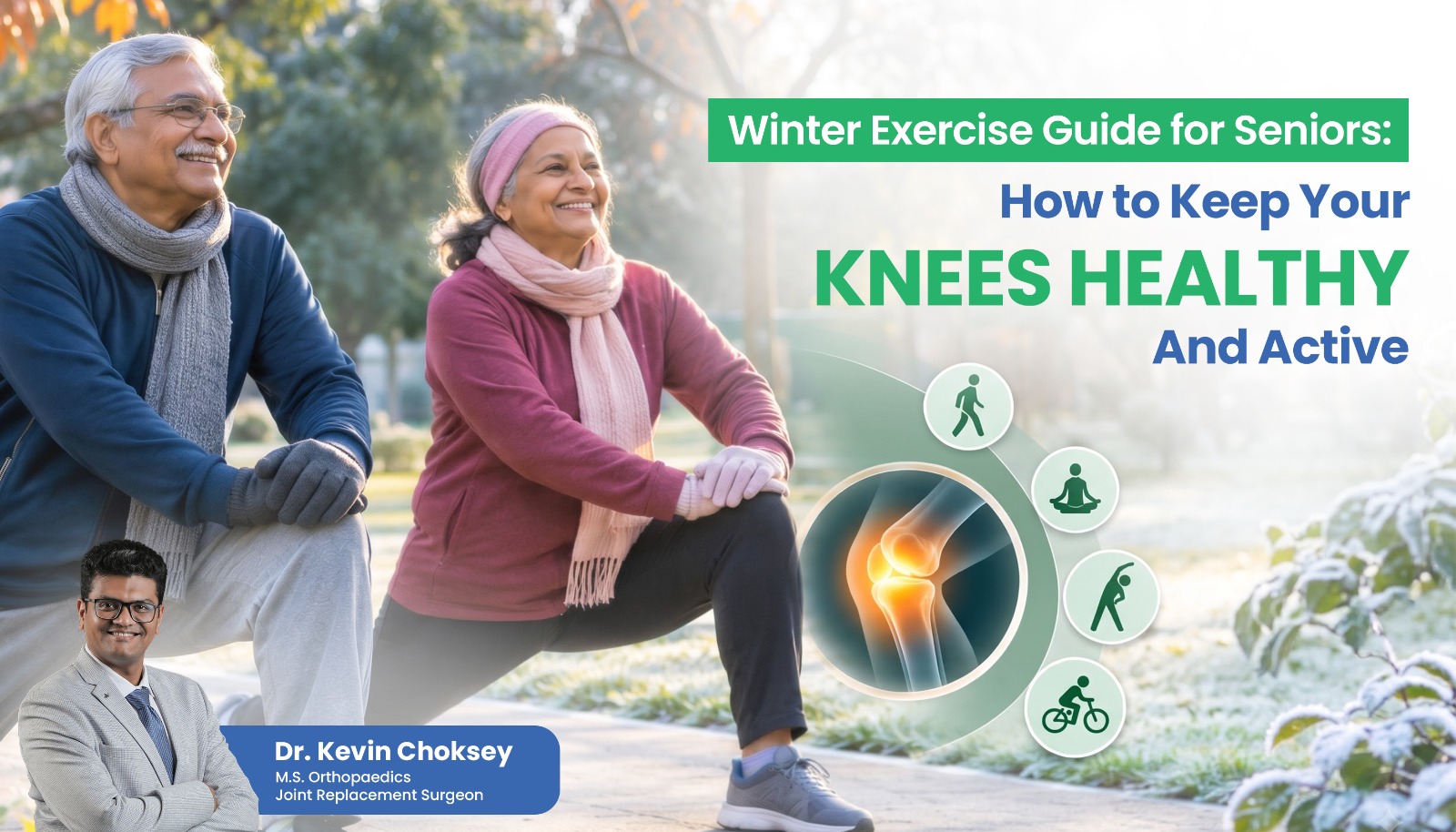
In this guide, Dr. Kevin Choksey, an orthopaedic and joint replacement surgeon in Surat, shares practical tips to help seniors care for their knees during winter.
Why Does Knee Pain Increase During Winter?
Many older adults notice increased knee stiffness or discomfort when the weather becomes colder. Although cold weather does not necessarily worsen the underlying joint damage, changes in activity levels, muscle stiffness, and sensitivity to pain may contribute to discomfort.
Some common reasons include:
- Reduced physical activity: Spending more time indoors can lead to weaker muscles and stiffer joints.
- Existing arthritis: People with knee osteoarthritis may experience changes in pain and stiffness during colder weather.
- Muscle stiffness: Cold conditions can make it feel harder to get moving, particularly after sitting for long periods.
- Less flexibility: Limited movement can affect the flexibility of the muscles and tissues surrounding the knee.
Regular movement, appropriate exercises, and keeping the body warm can help seniors manage these challenges.
7 Best Winter Exercises for Seniors to Keep Their Knees Healthy
Choosing low-impact exercises is a practical way to stay active without placing unnecessary stress on the knees. Seniors should select activities according to their fitness level and existing joint conditions.
1. Walking at a Comfortable Pace
Walking is one of the simplest ways to maintain mobility and overall fitness.
During winter, seniors can walk indoors, around their home, or in a safe outdoor area when the weather is pleasant.
Benefits of walking:
- Helps maintain knee mobility.
- Supports overall fitness.
- Strengthens the muscles used during everyday movement.
- Encourages an active daily routine.
Winter tip: Begin with a short walk and gradually increase the duration as your comfort and fitness improve. Wear comfortable footwear with good grip to reduce the risk of slipping.
2. Seated Knee Extensions
Seated knee extensions are a simple exercise that can help strengthen the muscles at the front of the thigh, which support knee function.
How to perform the exercise:
- Sit comfortably on a sturdy chair with your back supported.
- Slowly straighten one leg in front of you.
- Hold the position briefly without forcing the knee.
- Lower the leg slowly and repeat on the other side.
Start with a few repetitions and increase gradually if comfortable.
Benefits: This exercise helps maintain thigh muscle strength and supports everyday movements such as standing and walking.
3. Heel Slides
Heel slides gently move the knee through a comfortable range of motion.
How to perform the exercise:
- Lie on your back on a firm, comfortable surface.
- Slowly slide one heel toward your body, bending the knee.
- Move only as far as comfortable.
- Slowly slide the heel back to the starting position.
Repeat with the other leg if appropriate.
Benefits: Heel slides can help maintain knee flexibility and reduce stiffness associated with inactivity.
People with recent knee surgery or significant knee pain should perform this exercise only if recommended by their doctor or physiotherapist.
4. Ankle Pumps
Ankle pumps are easy movements that seniors can perform while sitting or lying down.
How to perform the exercise:
- Sit or lie in a comfortable position.
- Point your toes gently away from your body.
- Pull your toes back toward your shin.
- Repeat slowly without straining.
Benefits: Ankle pumps encourage lower-leg movement and can support circulation during periods of inactivity.
They are a useful addition to a gentle movement routine, especially for people who spend long periods sitting.
5. Gentle Hamstring Stretching
The hamstrings are the muscles at the back of the thigh. Maintaining their flexibility can support comfortable movement around the hip and knee.
How to perform the exercise:
- Sit near the front of a sturdy chair.
- Extend one leg forward with the heel resting on the floor.
- Keep your back straight and gently lean forward from the hips.
- Stop when you feel a mild stretch at the back of your thigh.
- Hold briefly, breathe normally, and return to the starting position.
Avoid bouncing or forcing the stretch.
Benefits: Gentle stretching can help maintain flexibility and make everyday movements more comfortable.
6. Supported Sit-to-Stand Exercises
Standing up from a chair is an important everyday movement. Practising it with proper support can help improve functional leg strength.
How to perform the exercise:
- Sit on a sturdy chair with your feet flat on the floor.
- Lean forward slightly while keeping your back comfortable.
- Use your armrests or another stable support if needed.
- Stand up slowly, then sit down with control.
Begin with a small number of repetitions.
Benefits: This exercise helps strengthen the muscles used when getting out of a chair and performing other daily activities.
If standing causes knee pain or you have balance difficulties, seek guidance from a physiotherapist before attempting it.
7. Gentle Indoor Cycling
A stationary exercise bike may be a suitable low-impact option for seniors who find walking uncomfortable.
How to get started:
- Adjust the seat so your knees remain slightly bent when the pedals are at their lowest point.
- Begin with little or no resistance.
- Pedal slowly for a short period.
- Stop if you experience pain, dizziness, or unusual discomfort.
Benefits: Indoor cycling can help improve cardiovascular fitness and maintain knee movement without the repeated impact associated with running.
People with severe knee stiffness or limited knee bending should consult their doctor before starting.
Essential Winter Knee Care Tips for Seniors
Exercise is only one part of maintaining healthy knees. Everyday habits can also make a difference.
Keep Your Knees Warm
Wear comfortable clothing that keeps your legs warm during colder weather. Gentle warmth may help you feel more comfortable before starting your exercise routine.
Avoid applying very hot heating pads directly to the skin, particularly if you have reduced sensation.
Warm Up Before Exercising
Start with five to ten minutes of gentle movement, such as slow indoor walking or easy ankle movements.
A gradual warm-up helps prepare your body for exercise and reduces the temptation to make sudden movements.
Avoid Long Periods of Sitting
Remaining in the same position for too long can increase stiffness. Take regular movement breaks throughout the day, even if you only stand up with support or walk around your room.
Wear Safe Footwear
Choose well-fitting shoes with good grip and adequate support. Avoid slippery footwear, particularly when walking on wet floors or uneven outdoor surfaces.
Maintain a Healthy Weight
Excess body weight can increase the load placed on the knee joints. A balanced diet and suitable physical activity can help manage weight and support joint health.
Stay Hydrated
Remember to drink water regularly, even when you do not feel as thirsty in winter. Adequate hydration supports general health and helps maintain a consistent daily routine.
People also want to know about Bend Your Knee Better After Partial Knee Replacement: Can You Bend Your Knee Better After Partial Knee Replacement? What Recovery May Look Like?
What Should Seniors Avoid During Winter Exercise?
To protect their knees, seniors should be cautious about exercises and movements that cause discomfort or increase the risk of falls.
Avoid or modify the following:
- High-impact exercises: Jumping and running may not be suitable for people with painful knee arthritis.
- Deep squats: Deep knee bending can aggravate symptoms in some individuals.
- Sudden movements: Quick turns or forceful bending can place unnecessary stress on the knee.
- Slippery surfaces: Wet floors and uneven paths increase the risk of falls.
- Exercising through pain: Persistent or sharp pain is a reason to stop and reassess the activity.
Remember that every person’s knees are different. Exercises that work well for one senior may not be appropriate for another.
When Should Seniors Consult an Orthopaedic Surgeon for Knee Pain?
Occasional stiffness does not always indicate a serious problem. However, persistent knee pain should not be ignored or automatically attributed to winter.
Consult an orthopaedic specialist if you experience:
- Knee pain that continues or keeps returning.
- Stiffness that interferes with walking or daily activities.
- Swelling around the knee joint.
- Difficulty climbing stairs or getting up from a chair.
- Reduced knee movement or increasing difficulty walking.
- Pain that does not improve with appropriate rest and activity modification.
Seek urgent medical attention if the knee becomes suddenly very painful, hot, red, or significantly swollen, especially with fever, or if you cannot bear weight after an injury.
An orthopaedic evaluation can help identify the cause of the symptoms and determine the appropriate treatment.
How Can Dr. Kevin Choksey Help Seniors With Knee Problems?
Dr. Kevin Choksey is the best orthopaedic and joint replacement surgeon in Surat who specialises in partial knee replacement, total knee replacement, and robotic-assisted knee replacement.
For seniors experiencing persistent knee pain, an assessment can help determine whether the problem is related to arthritis, joint damage, or another condition.
Treatment depends on the individual’s symptoms, examination findings, activity level, and overall health. Depending on the condition, management may include physiotherapy, suitable exercises, lifestyle changes, medication prescribed by a doctor, or surgical treatment when necessary.
For people with advanced knee arthritis who continue to experience significant pain despite appropriate non-surgical treatment, knee replacement may be considered after a detailed medical evaluation.
Learn more about Dr. Kevin Choksey and his orthopaedic services at https://drkevinchoksey.com/.
Frequently Asked Questions (FAQs)
1. Which winter exercises are best for seniors with knee pain?
Gentle walking, seated knee extensions, ankle pumps, and suitable stretching may help maintain mobility. Stationary cycling can also be an option for some people. The best exercises depend on the severity and cause of the knee pain.
2. Does cold weather cause knee arthritis?
Cold weather does not directly cause arthritis. However, some people with existing arthritis experience more stiffness or discomfort during colder months. Staying active and following an appropriate treatment plan may help manage symptoms.
3. How long should seniors exercise during winter?
Start with short sessions of around five to ten minutes if you are new to exercise, then gradually increase the duration as tolerated. The long-term goal should reflect your health, fitness, and medical advice rather than a fixed target for everyone.
4. Is walking good for elderly people with knee arthritis?
Walking may help maintain mobility, muscle function, and general fitness. Choose a comfortable pace and a safe surface. If walking increases knee pain, reduce the duration and consult a healthcare professional about alternatives.
5. Should seniors exercise when their knees feel stiff in the morning?
Gentle movements may help ease stiffness, but avoid forcing the joint. Start slowly and stop if pain increases. Persistent or severe morning stiffness should be evaluated by a medical professional.
6. When should an older adult consider knee replacement surgery?
Knee replacement may be considered when advanced knee arthritis causes persistent pain and limits everyday activities despite appropriate non-surgical treatment. An orthopaedic surgeon can assess whether surgery is suitable for the individual.
Conclusion
Winter does not have to mean less movement or more time spent worrying about knee pain. With gentle exercises, proper warm-ups, safe footwear, and regular movement breaks, seniors can work toward maintaining stronger muscles, better mobility, and greater confidence in everyday activities.
The key is to stay consistent without overstraining the joints. Start slowly, listen to your body, and choose exercises that match your physical condition.
If knee pain or stiffness continues to interfere with your daily life, consult an orthopaedic specialist for an appropriate assessment.
For expert guidance on knee pain and joint health, visit Dr. Kevin Choksey’s website: https://drkevinchoksey.com/
[…] People also want to know about Winter Exercise Guide for Seniors information: Winter Exercise Guide for Seniors: How to Keep Your Knees Healthy and Active […]