Introduction
Bending your knee is something you may rarely think about until it becomes painful. Simple activities such as sitting comfortably, climbing stairs, getting into a car, or putting on your shoes can become difficult when knee arthritis affects your movement.
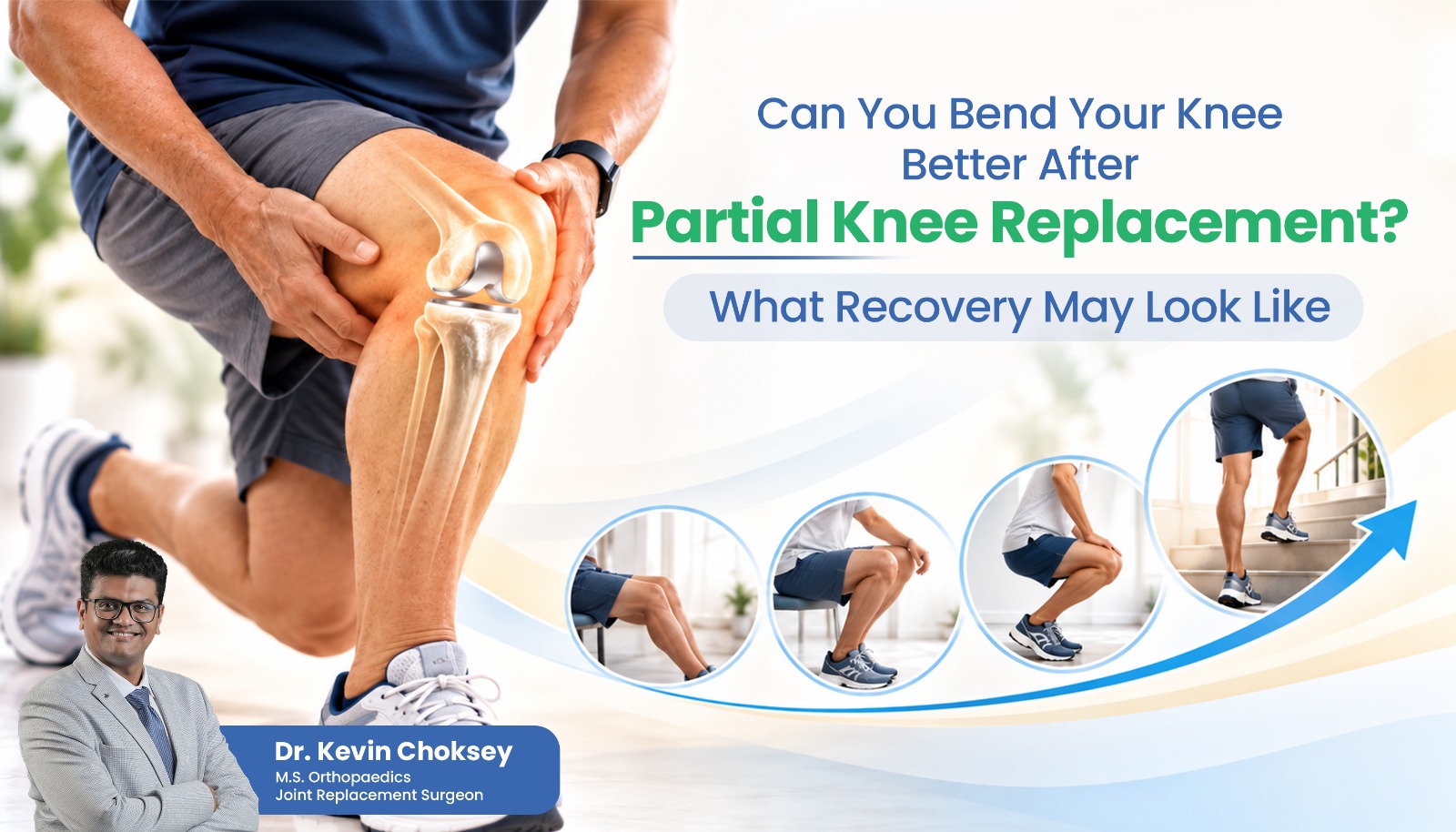
If you are considering partial knee replacement surgery or have recently undergone the procedure, you may be wondering: Can you bend your knee better after partial knee replacement?
The encouraging news is that many patients experience improved knee movement and reduced pain after partial knee replacement. However, the amount of bending you regain and how quickly you achieve it depend on several factors, including the condition of your knee before surgery, your overall health, the surgical outcome, and your rehabilitation routine.
Partial knee replacement is designed to replace the damaged part of the knee while preserving the healthy portions of the joint. For suitable patients, this approach may help maintain a more natural feeling of movement.
Understanding the recovery process can help you set realistic expectations, follow your physiotherapy plan, and feel more confident as you work towards your daily activities.
In this guide, we explain how knee bending may improve after partial knee replacement, what recovery looks like week by week, which exercises may help, and when to seek advice from your orthopedic surgeon.
What Is Partial Knee Replacement Surgery?
Partial knee replacement, also called unicompartmental knee replacement, is a surgical procedure that replaces only the damaged compartment of the knee rather than the entire joint.
The knee has three main compartments:
- Medial compartment: The inner side of the knee.
- Lateral compartment: The outer side of the knee.
- Patellofemoral compartment: The area where the kneecap meets the thigh bone.
When arthritis or cartilage damage is limited to one compartment, partial knee replacement may be an option for carefully selected patients.
During surgery, the surgeon removes damaged joint surfaces in the affected compartment and replaces them with artificial components. Healthy cartilage, bone, and supporting structures in the other compartments are preserved where possible.
How Is Partial Knee Replacement Different From Total Knee Replacement?
The main difference is how much of the knee joint is replaced.
- Partial knee replacement: Only the affected compartment is replaced.
- Total knee replacement: The damaged joint surfaces across the knee are replaced as part of a more extensive procedure.
Because partial knee replacement preserves more of the natural knee, some patients experience a more natural feeling during movement and may regain mobility relatively quickly.
However, partial knee replacement is not suitable for everyone. The condition of the remaining cartilage, knee ligaments, joint alignment, and the pattern of arthritis all influence whether this procedure is appropriate.
Your orthopedic surgeon can determine which option best fits your knee condition and treatment goals.
Can You Bend Your Knee Better After Partial Knee Replacement?
Yes, many patients can bend their knee more comfortably after partial knee replacement, particularly when arthritis-related pain and stiffness were limiting movement before surgery.
The primary goal of the procedure is to reduce pain and improve knee function. When painful joint surfaces are replaced, movement may become easier, allowing patients to work towards activities that were previously difficult.
Preserving healthy parts of the knee may also help maintain more natural movement in suitable patients.
However, improved knee bending is not guaranteed. Some patients have limited movement for several weeks or months because of swelling, muscle weakness, scar tissue, or stiffness that existed before surgery.
It is also important to understand that partial knee replacement does not automatically increase your maximum bending angle. The outcome depends on your starting range of motion, the condition of your knee, and how your recovery progresses.
Why Knee Bending May Improve After Surgery
Several changes may contribute to better knee movement following partial knee replacement.
- Less pain during movement
Arthritis can cause pain when the damaged joint surfaces move against each other. Replacing the affected surfaces may reduce this source of pain, making it easier to bend and straighten the knee.
- Preservation of healthy knee structures
Partial knee replacement preserves more of the natural joint than total knee replacement. In appropriate candidates, this may help maintain the knee’s natural movement and function.
- Improved ability to exercise
When pain decreases, patients may find it easier to participate in physiotherapy and strengthen the muscles surrounding the knee.
- Better everyday mobility
As strength and confidence improve, activities such as sitting, standing, and climbing stairs may become more manageable.
These benefits develop gradually. Early swelling and discomfort are normal after surgery and can temporarily make knee bending more difficult.
How Much Can You Bend Your Knee After Partial Knee Replacement?
There is no single knee-bending angle that every patient should achieve after partial knee replacement. Your expected range of motion depends on your preoperative movement, surgical findings, rehabilitation, and individual healing.
Knee bending is usually measured in degrees of flexion. A fully straight knee is approximately 0 degrees, while greater flexion means the knee can bend further.
The following figures are general examples of how different bending angles relate to daily activities, not guaranteed recovery targets.
| Knee bend | How it may help |
| Around 90 degrees | Often sufficient for sitting in many chairs and performing basic activities |
| Around 100–110 degrees | May make getting into a car and using stairs more manageable |
| Around 120 degrees or more | Can support deeper bending and more flexible movement for some activities |
Actual requirements vary with your height, limb proportions, chair height, and the way you perform each activity. Some tasks require less movement than others, and deep squatting may require substantially more knee flexion.
Your physiotherapist can measure your knee movement and establish appropriate goals for your recovery.
Remember: Progress matters more than comparing your knee bend with someone else’s results. A steady improvement in comfort, strength, and function is often more meaningful than reaching a particular number quickly.
Partial Knee Replacement Recovery: What to Expect Week by Week
Recovery after partial knee replacement is usually gradual. Some patients regain movement relatively quickly, while others need additional time because of swelling, stiffness, or pre-existing mobility problems.
Your surgeon and physiotherapist will guide your progress according to your condition.
Week 1: Managing Pain and Swelling
During the first week, your knee may feel swollen, stiff, and uncomfortable. Bending can be difficult, even if your movement was reasonably good before surgery.
Your initial priorities are to:
- Control pain and swelling using the methods recommended by your care team.
- Begin gentle knee movement as advised.
- Practice standing and walking with appropriate support.
- Perform prescribed circulation and muscle-activation exercises.
- Follow your wound-care and medication instructions.
Do not force the knee into a deep bend. Gentle, repeated movement within your prescribed limits is generally more appropriate than pushing through severe pain.
Weeks 2–3: Gradually Improving Movement
As the initial discomfort begins to settle, you may find it easier to bend and straighten your knee.
Physiotherapy often focuses on improving range of motion, activating the quadriceps muscles, and developing a safer walking pattern.
You may begin to notice improvements in everyday activities, although swelling and stiffness can still fluctuate throughout the day.
Avoid judging your recovery by a single difficult day. Healing is rarely perfectly linear.
Weeks 4–6: Building Strength and Confidence
During this stage, many patients continue working on knee flexibility, walking endurance, and muscle strength.
Depending on your progress, your physiotherapist may introduce additional exercises or gradually increase the difficulty of existing ones.
You may find it easier to:
- Sit down and stand up from a chair.
- Walk for longer periods.
- Manage stairs with appropriate technique.
- Perform household activities with less discomfort.
Not everyone reaches these milestones within six weeks. Your individual recovery plan should take priority over a fixed timetable.
Six Weeks to Three Months: Improving Daily Function
Over the following weeks, strength, balance, and confidence may continue to improve. Your knee may feel more comfortable during routine movement, although some swelling or stiffness can persist.
Continue your prescribed exercises and attend follow-up appointments. Your surgeon may assess your range of motion, wound healing, stability, and overall progress.
Returning to demanding activities or sports should be based on your recovery and your surgeon’s advice rather than the number of weeks since surgery.
Three Months and Beyond: Continuing Progress
Some patients continue to notice improvements for several months as the muscles become stronger and the knee becomes more comfortable during daily activities.
If bending remains significantly restricted, worsens, or stops improving despite appropriate rehabilitation, consult your orthopedic surgeon. Additional assessment may be needed to identify the cause.
People also want to know about recovery timeline after partial knee replacement: Recovery Timeline After Partial Knee Replacement (Microplasty) : From Day One to Full Mobility
Exercises That May Help Improve Knee Bending After Partial Knee Replacement
Physiotherapy plays an important role in restoring knee movement after surgery. Your exercise programme should be tailored to your surgical instructions, pain levels, balance, and general health.
Only perform exercises approved by your surgeon or physiotherapist, particularly during the early recovery period.
1. Heel Slides
Heel slides are commonly used to practise bending the knee gently.
How they are performed:
- Lie on your back with your legs comfortably supported.
- Slowly slide the heel of your operated leg towards your body.
- Bend the knee only as far as is comfortable and permitted.
- Slowly slide the heel back to the starting position.
Avoid forcing the movement or making sudden jerking motions.
2. Quadriceps Sets
The quadriceps muscles at the front of the thigh help support the knee and are important for walking and standing.
How they are performed:
- Sit or lie with your leg supported.
- Gently tighten the muscles at the front of your thigh.
- Hold the contraction for the period recommended by your physiotherapist.
- Relax and repeat as instructed.
This exercise focuses on muscle activation rather than increasing the bending angle.
3. Ankle Pumps
- Ankle pumps involve moving your feet up and down while your legs are supported. They are often included in early postoperative programmes to encourage circulation.
- They do not directly increase knee flexion, but they may be part of your overall recovery and blood clot prevention plan.
4. Supported Sit-to-Stand Practice
- When your care team considers it safe, practising standing up from a suitable chair can help improve leg strength and everyday function.
- Use the recommended support and avoid low chairs if they make the movement difficult or unsafe.
Important Exercise Advice
- Follow your prescribed repetitions and frequency.
- Increase activity gradually rather than suddenly.
- Stop and seek advice if an exercise causes sharp or increasing pain.
- Do not force the knee to bend through severe discomfort.
- Use walking aids until your care team advises that they are no longer needed.
More exercise is not always better. A well-planned routine with adequate recovery time is generally more helpful than repeatedly overloading a healing knee.
What Can Affect Knee Bending After Partial Knee Replacement?
Several factors influence how much movement you regain after surgery.
Knee Movement Before Surgery
Patients who had relatively good knee movement before surgery may have an easier time maintaining it. Long-standing stiffness can make postoperative rehabilitation more challenging.
Swelling and Pain
Swelling can physically restrict movement, while pain may make you reluctant to bend the knee. Appropriate pain management and the measures recommended by your medical team can help you participate in physiotherapy.
Muscle Strength
Weak quadriceps and other supporting muscles may affect walking, balance, and your ability to perform everyday activities.
Scar Tissue and Joint Stiffness
Some patients develop excessive scar tissue or persistent stiffness that restricts movement. If progress is limited, your surgeon may need to investigate the cause.
Rehabilitation and General Health
Regular, appropriate physiotherapy can support recovery. Age, other medical conditions, previous knee procedures, and individual healing patterns may also affect the timeline.
The goal is not to force the knee to bend as quickly as possible. It is to restore useful movement safely and sustainably.
When Should You Contact Your Knee Surgeon?
Some discomfort and swelling are expected after partial knee replacement. However, certain symptoms require medical attention.
Contact your surgical team promptly if you experience:
- Increasing pain or swelling rather than gradual improvement.
- A wound that becomes increasingly red, warm, or begins draining.
- Fever or other signs of possible infection.
- A sudden loss of knee movement or a new inability to bear weight.
- Persistent stiffness that prevents meaningful progress with rehabilitation.
Seek urgent medical care for sudden breathlessness, chest pain, or symptoms suggesting a blood clot, such as new significant calf swelling or pain.
Do not wait for your next routine appointment if you are concerned about a new or worsening symptom.
Choosing the Right Orthopedic Surgeon for Partial Knee Replacement
The success of partial knee replacement depends on appropriate patient selection, surgical planning, the surgeon’s experience, and postoperative rehabilitation.
When choosing a knee replacement specialist, consider:
- Experience with partial and total knee replacement procedures.
- The ability to assess whether arthritis is limited to one compartment.
- Access to appropriate diagnostic and surgical facilities.
- Clear explanations of the benefits, limitations, and risks of each treatment option.
- A structured postoperative physiotherapy and follow-up programme.
- Compassionate communication that addresses your concerns and recovery goals.
Advanced surgical technology can support treatment in selected cases, but it does not replace clinical judgment or guarantee a specific outcome.
If you are considering best knee replacement with Dr. Kevin Choksey, discuss your symptoms, imaging findings, suitability for partial knee replacement, and expected rehabilitation needs during a consultation. Ask about the facilities available for your procedure and how your progress will be monitored after surgery.
Conclusion: Work Towards Better Knee Movement With the Right Care
Can you bend your knee better after partial knee replacement? For many suitable patients, the answer is yes. Replacing the damaged part of the knee can reduce arthritis-related pain and create an opportunity to improve movement, strength, and daily function.
However, recovery takes time. Swelling, stiffness, muscle weakness, and pre-existing joint limitations can influence your progress. Consistent physiotherapy, appropriate pain management, and regular communication with your orthopedic team can help you work towards your recovery goals.
Focus on gradual improvements rather than comparing your results with others. With an appropriate treatment plan and realistic expectations, you can take meaningful steps towards more comfortable movement.
Take the Next Step With Dr. Kevin Choksey
If knee pain or stiffness is making everyday activities difficult, consult Dr. Kevin Choksey for an evaluation of your knee replacement options. Discuss whether partial knee replacement is suitable for your condition, how surgery may affect your knee bending, and what rehabilitation support you may need.
Choose a treatment plan that considers your individual needs, safety, mobility goals, and long-term joint health.
Contact Dr. Kevin Choksey’s clinic to schedule a consultation and take an informed step towards better knee movement and a more active life.